 |
| [Photo credit to the owner] Ammuen Pay Daytoy, SAKADA: THE FILIPINO SUGARCANE PLANTERS IN HAWAII History
During the colonial era, the Spanish East Indies, which included the Philippine Islands, were administered as part of New Spain. It is likely, but not documented, that people from the Philippines visited the Hawaiian Islands en route to/from Mexico.
19th century
A few Filipinos, known as "Manila men" settled in the Kingdom of Hawaii during the 19th century. They mainly worked as cooks and musicians in the Royal Hawaiian Band. No deliberate migration existed during this period.
Manila Men
The Manila Men were some of the first Filipino overseas workers. They were the first Filipinos to be documented having come to North America.
Early to Mid 20th century
The importation of Filipinos workers called “Sakadas,” which roughly translates to “Filipino migrant workers” and also referred to the actual importation of these workers, began in 1906 and continued until 1946.
During that time an estimated 125,000 Filipinos were recruited from the Ilocos and Visayas regions of the Philippines to work in Hawaii. Initially, Filipino men were recruited by the Hawaiian Sugar Planters' Association (HSPA) from the Philippines to Hawaii to work in the sugarcane fields. Later sakadas were recruited for work in both sugarcane and pineapple fields. Filipino migrant workers were recruited to replace Japanese workers that had been going on strike because of low pay, long work hours and substandard living conditions. These ethnic groups were segregated so that Filipinos would not be influenced by the striking Japanese workers and so the Filipinos could be used as leverage against the striking Japanese. Filipino workers that lacked education and had previous experience in agricultural work were preferred by recruiters because they were perceived to be easier exploit and control.
Sakadas were 3 year contract workers and did not have the intention to stay in Hawaii. Most wanted to make their riches and go back home with enough money to buy land. This was common practice up until the 1940s. The contracts gave them passage to Hawaii and then back to the Philippines after their contract was over. In the 1940s the perception of working in Hawaii became glorya (glory) and so more Filipinos sought to stay in Hawaii.
Workers were housed in plantation barracks that they paid rent for, worked long 10-hour days, 6 days a week and were paid 90 cents a day. They were the lowest paid workers of all the ethnicities working on the plantations. Most sakadas were single males; however, over time sakadas would send for relatives or bring families with them.
The last sakadas in 1946 were notable and different compared to all the sakadas prior and are referred to as the Sakada ‘46. Several factors making the Sakada ‘46 different was that it included more women, children and relatives of previous sakadas. It was also different in that some had an American colonial education, and professionals were included.
Hawaiian Sugar Planters' Association
Many Filipino farm laborers were recruited to go to Hawaii in 1906 by the Hawaiian Sugar Planters’ Association (HSPA) to work on the sugar plantations in Hawaii. Albert F. Judd, an HSPA recruiter tried to get three hundred Filipinos to work in Hawaii. Those Filipinos were sent to the Olaa Plantation on the Big Island of Hawaii. The sugar industry was a booming at the time so the newly annexed countries of Hawai’i and the Philippines were used in concert to support the industry for the United States.
By the 1920s there was an average of 7,600 Filipinos arriving in Hawaii annually. Most Filipinos considered themselves temporary residents in Hawaii until around the 1940s. The HSPA preferred Filipinos to work on sugar plantations because they were known to be hard working and were given the lowest wage of all ethnicities working in the plantation.
Impact on Hawaii's working class
Some Native Hawaiians worked alongside Filipinos in the sugar plantations. Since the sugar industry in Hawaii was the main source of income for the working class, there was high demand for these jobs. American sugar plantation owners weren’t able to get Native Hawaiians to work for them so they relied heavily on the importation of other ethnicities.
After 1965
The Immigration and Nationality Act of 1965 allowed more Filipinos to bring family to Hawaii and this allowed more Filipino arrivals, particularly Filipino women, to enter the state. The increase in arrivals also caused some backlash and in the 1970s Filipinos felt discriminated against. They also tended to do more poorly at schools than average in that decade. The reasons why Filipino students underperformed in school in the 1970s is unknown, but discrimination may have contributed. In 1970, of the 93,915 Filipinos living in Hawaii, only 34.4% were high school graduates.
[source: Wikipedia]
|
Showing posts with label Informative article. Show all posts
Showing posts with label Informative article. Show all posts
Thursday, January 30, 2020
Ammuen Pay Daytoy, Sakada


Sunday, November 24, 2019
EUSTAQUIO DALIVA: Finding a Flower to Put Color into His Life
Taldiap: Sakada, Nagpuonan ti Filipino Nangruna Dagiti Ilokano tapno Madanon ti Hawaii...

 |
| DALIVA Family |
IN 1946, Eustaquio Daliva, who hailed from Pasuquin, Ilocos Norte, came to Hawai'i to work in the plantations. He came on board S.S. Maunawili from Port Salomague in Cabugao, Ilocos Sur, Through his brother Eusebio's sponsorship, who had earlier come to Hawai'i in the 20's, Eustaquio and his three other brothers Epifanio, Jacinto and Saturnino were able to come to Hawai'i as plantation recruits.
Not all the brothers stayed put in Hawai'i, though. Epifanio headed to work in California while Jacinto chose to work on a boat. Saturnino and Eustaquio decided to remain on Maui, who together with Eusebio, all work for the Wailuku Sugar Company. The three brothers lived in Happy Valley behind the former T.K. Supermarket.
The backbreaking work must have predisposed Eustaquio to contract tuberculosis that at that time was not easy to cure. For four years, he stayed at the Kula Sanitorium to recuperate, which he did, and promptly went back to work at Wailuku Sugar Company.
Eustaquio's first work at Wailuku Sugar Company was as mud truck driver. For $1 per day, he would pick up all the trash from the cane field and picked up rocks for cracking into smaller pieces.
Next, Eustaquio worked in the "seed bath" department. There he bundled up "pula-pula" or the cut sugar cane stalks and dipped them in hot water mixed with chemical to exterminate all of the bugs, bacteria, or aphids that would attack the young plant.
In 1956, Eustaquio decided to go back to Pasuquin find a wife. He did find a jewel in Flora who he wed after the usual traditional "danon." Smitten by her beauty, Eustaquio knew in his hear that this lady who was working as a seamstress in Manila and who came to Pasuquin just to sew the graduation dress of her cousin who was finishing high school. That cousin was Flora's mother's caregiver and so it was important for Flora to go home and show her appreciation. As luck would have it, the two met, the man falling in love with the woman even at the first time that he laid his eyes on him.
But something posed as an obstacle. In Pasuquin in those years, women were only permitted to marry if they were twenty four years old. Flora was only twenty two, fifteen years younger than Eustaquio. The match was good, and the wedding arranged, but this proble stood in the way. So the elders solved the puzzle by taking out two years from Eustaquio and putting those two years to Flora's. That made Flora twenty four and Eustaquio thirty five. With that solved, the two got married on April 15, 1956.
In July 1956, Eustaquio came back to Hawai'i, Flora followed him in November 1956.
When Flora arrived in Happy Valley, she said, "Happy Valley was not a happy valley because there were very few women at that time. Only many years later would more women come."
Eustaquio did not want Flora to work at the expense of their children. This made her full-time homemaker until their youngest child was 13.
In 1969, she finally joined the workforce, with her first job at the St. Anthony School Cafeteria where she stayed until 1973. From there, until 1976, she moved to the Charthouse Restaurant [now Carrie and Eddie's Hideaway]. In 1976, She moved to the Maui Memorial Hospital's kitchen. There she prepared desserts, salads, and other until her retirement in 1995.
Flora enjoys gardening. Her house is sorrounded with beautiful flowering plants and grapevines heavy with fruits.
With her age padded, she was able to retire two years earlier. Eustaquio who passed away in 2003 at age 84, retired when she was 58.
Eustaquio and Flora were blessed with three children. Merlyn, their eldest and married to Leonard Nagata, teaches at Lihikai School. They have two children.
Linda, the second child and who works at the Maui Arts and Cultural Center, is married to Bryan Dunn. They have three children.
Their youngest, who works at Sensei Restaurant, is Efren.
Flora advice the older people: "Go to the beach and pick limu [seaweeds] for relaxation. Plant flowers and vegetables. It's a good therapy."
Her advice to younger generations: "Go to school and receive good education so that it easier to find a better paying job."
EUSTAQUIO DALIVA
Finding a Flower to Put Color into His Life
*Sakada Corner, May 2oo9 Issue
wwwammuenpaydaytoysakada.blogspot.com
Saturday, November 23, 2019
MARIANO BULOSAN GUERERRO Following His Father's Footsteps...
Taldiap: Sakada, Nagpuonan ti Filipino Nangruna Dagiti Ilokano tapno Madanon ti Hawaii...


MARIANO Guererro came to Hawaii in 1946 together with his brother, Joe Guererro, to join their father, Nemesio Guererro who came in the 1920s. They came on aboard the S.S. Maunawili.
Born on October 1, 1923 from Cadaratan, Bacarra, Ilocos Norte, he followed his father's footsteps to find a better life.
As soon as Mariano landed on Maui, he worked at Hawaiian Commercial & Sugar Company doing variety of jobs. He worked first at the Puunene Mill, helped in surveying the fields, did carpentry jobs, and lastly, drove the planting machine. He retired from his work in 1985.
Mariano and his brother lived with their father Nemesio in Spanish B in Puunene where they had happy memories. There were social events every weekend at the Filipino Clubhouse. Spanish B was a place where everyone knew everybody and cared for each other. Many sakadas like Mariano were able to plant vegetables in the fields by the ditches. They shared those vegetables with everyone. Today, none of these are in existence because of liabilities.
In 1954, Mariano decided to go back to the Philippines to find a wife. Although he had several penpals, none of them attracted his attention. There was one special girl though that he met; it was love at first sight. That attractive young lady was Leonora Cuaresma who was just finishing up her high school education at the Bacarra Provincial High School at that time. They met at her aunt's store after one school day. After that meeting, he courted her, Ilokano-style.
One day, Mariano went unannounced to Leonoras's home to meet her parents and told them his intention of marrying their daughter. Leonora was ver surprised to see him there. Before leaving, he asked Leonora a favor, to mail a letter for him for someone when she would go to the post office. Leonora accepted the letter not knowing it was addressed to her. He had left when she realized this. The letter was a marriage proposal. Leonora and her parents accepted Mariano's proposal. They were married on March 1954 in Pasuquin, Ilcos Norte.
Mariano came back to Hawaii right after their wedding. Leonora followed him in November 1954. Both lived with Nemesio for 5 years. They were blessed with six children who had big dreams.
The oldest is Imelda, a teacher and dental hygienist in Alabama. She is married to Jerry Barron. They have two children, Jeremy and Nathan.
Their second child is Jerry. He worked for the State of Hawaii and lives in Honolulu.
Edna is their third child. She is a scretary with Mason Union. She married to Roy Abe. They have three children: Chelsey, Courtney, and Casey.
Their fourth child is Nelly. She works for Delta Airlines in Los Angeles.
Henry, a civil engineer, is their fifth child. He lives in Honolulu.
And their youngest child is Tracy. She's a registered nurse and works at the Veterans Clinic on Maui. She is married to Garry Aplanalp. They have three children: Cole, Tristan, and Sierra.
Imelda Barron shared these heartwarming memories about theor Dad: "Dad was a good provider and a good fisherman. To give Mom a break from us kids, he would take us to the beach to play, swim, and collect seashells while he goes and spear fishing for eels, octopus and fishes for our dinner. He was a loving a caring Dad. He hardly got upset but he was great disciplinarian to us kids. He was dependable when he got involved with the Filipino Community activities. He was fascinated with outer space and very often looked up at the stars at night. He was a simple man who loved his family very much. " Mariano passed away on April 28, 2001.
Mariano and Leonora were active members of the KFCA [Kahului Filipino Community Asociation]. In fact, Mariano was chosen as an outstanding member of the association.
Leonora, besides being a good and busy mother, also worked in the old Noda Supermarket, Ikeda's Store, and Homemaid Bakery. In 1980s, she even worked at KNUI with the late Mr. Eddie Sales in his Variety Show.
Leonora's advice to young people: "Go to school for a good education because education helps you in getting a better paying job. Respect your parents and older folks."
Her advice to her contemporaries: "Don't despise anybody. Look at yourself first before talking about other people. Don's neglect youself. Pamper and treat yourself well."
Born on October 1, 1923 from Cadaratan, Bacarra, Ilocos Norte, he followed his father's footsteps to find a better life.
As soon as Mariano landed on Maui, he worked at Hawaiian Commercial & Sugar Company doing variety of jobs. He worked first at the Puunene Mill, helped in surveying the fields, did carpentry jobs, and lastly, drove the planting machine. He retired from his work in 1985.
Mariano and his brother lived with their father Nemesio in Spanish B in Puunene where they had happy memories. There were social events every weekend at the Filipino Clubhouse. Spanish B was a place where everyone knew everybody and cared for each other. Many sakadas like Mariano were able to plant vegetables in the fields by the ditches. They shared those vegetables with everyone. Today, none of these are in existence because of liabilities.
In 1954, Mariano decided to go back to the Philippines to find a wife. Although he had several penpals, none of them attracted his attention. There was one special girl though that he met; it was love at first sight. That attractive young lady was Leonora Cuaresma who was just finishing up her high school education at the Bacarra Provincial High School at that time. They met at her aunt's store after one school day. After that meeting, he courted her, Ilokano-style.
One day, Mariano went unannounced to Leonoras's home to meet her parents and told them his intention of marrying their daughter. Leonora was ver surprised to see him there. Before leaving, he asked Leonora a favor, to mail a letter for him for someone when she would go to the post office. Leonora accepted the letter not knowing it was addressed to her. He had left when she realized this. The letter was a marriage proposal. Leonora and her parents accepted Mariano's proposal. They were married on March 1954 in Pasuquin, Ilcos Norte.
Mariano came back to Hawaii right after their wedding. Leonora followed him in November 1954. Both lived with Nemesio for 5 years. They were blessed with six children who had big dreams.
The oldest is Imelda, a teacher and dental hygienist in Alabama. She is married to Jerry Barron. They have two children, Jeremy and Nathan.
Their second child is Jerry. He worked for the State of Hawaii and lives in Honolulu.
Edna is their third child. She is a scretary with Mason Union. She married to Roy Abe. They have three children: Chelsey, Courtney, and Casey.
Their fourth child is Nelly. She works for Delta Airlines in Los Angeles.
Henry, a civil engineer, is their fifth child. He lives in Honolulu.
And their youngest child is Tracy. She's a registered nurse and works at the Veterans Clinic on Maui. She is married to Garry Aplanalp. They have three children: Cole, Tristan, and Sierra.
Imelda Barron shared these heartwarming memories about theor Dad: "Dad was a good provider and a good fisherman. To give Mom a break from us kids, he would take us to the beach to play, swim, and collect seashells while he goes and spear fishing for eels, octopus and fishes for our dinner. He was a loving a caring Dad. He hardly got upset but he was great disciplinarian to us kids. He was dependable when he got involved with the Filipino Community activities. He was fascinated with outer space and very often looked up at the stars at night. He was a simple man who loved his family very much. " Mariano passed away on April 28, 2001.
Mariano and Leonora were active members of the KFCA [Kahului Filipino Community Asociation]. In fact, Mariano was chosen as an outstanding member of the association.
Leonora, besides being a good and busy mother, also worked in the old Noda Supermarket, Ikeda's Store, and Homemaid Bakery. In 1980s, she even worked at KNUI with the late Mr. Eddie Sales in his Variety Show.
Leonora's advice to young people: "Go to school for a good education because education helps you in getting a better paying job. Respect your parents and older folks."
Her advice to her contemporaries: "Don't despise anybody. Look at yourself first before talking about other people. Don's neglect youself. Pamper and treat yourself well."
MARIANO BULOSAN GUERERRO
Following His Father's Footsteps
*Sakada Corner, July 2o1o Issue
wwwammuempaydaytoysakada.blogspot.com
wwwfilamobserverarticles.blogspot.com
Monday, November 4, 2019
SEPONIAS BADUA, Built a Strong Foundation for His Family
Taldiap: Sakada, Nagpuonan ti Filipino nangruna Dagiti Ilokano tapno madanon ti Hawaii...
SEPONIAS VALDEZ BADUA came to Hawaii in 1946 together with his good friend, the late Bartolome Sablas. They came on board the S.S. Maunawili via Cabugao, Ilocos Sur. He came for the adventure and to find a better life for himself and his family even if meant leaving his young wife and children behind.
He was born on January 27, 1913 in Sarrat, Ilocos Norte.
He went to Kauai first and worked in Lihue for awhile, then moved to Honolulu before setting down in Maui. He worked at the Wailuku Sugar then transferred to Pioneer Mill in Lahaina. He worked in the field doing odd jobs, as a ditch man [irrigator], then as a luna [supervisor]. He retired from Pioneer Mill in 1978. He also worked part-time as a carpenter and helped his children build their homes.
Seponias lived in Wainee Village, more popularly called Lahaina Pump, together with his friends Arsenio Jacinto, and the late Bartolome Sablas, and Mr. Tabbal in a one room single men's house. He enjoyed attending some events in the camp especially chicken fights. He is remembered as a talented carpenter helping his neighbors and friends fix their homes without expecting anything in return. He and his wife Abdulia Gedulia Badua are blessed with five children.
Their first child is Germana, married to Ernesto Julian. She works for Pacific Life Guardian Insurance and as an agent for Valley of the Temple. They lived in Honolulu and have four children.
Their second child is Avelino Badua, married to Clarita. He is a retired contractor. They lived in Haiku and have one child.
Their third child is Jovita, married to Guillermo Tamayo. She retired from the hotel indusrty. They have four children.
The fourth child is Tarcila, married to Loreto Julian. She retired from the hotel industry and have four children.
The fifth child is Virginia, married to Moses Timbal. They own a tropical flower business in Hana. They have two children.
One of the many memories that Seponias have shared with his grandchildren was riding along the Lahaina-Pali [there was no highways yet at that time]. They even had to stop over at Maalaea to rest before heading back to Lahaina from central Maui.
Seponias enjoyed fishing with his son-in-law, Moses. He also enjoyed helping in Avelino's garden in Haiku. He live a happy long life with a simple goal: to see that all his children are settled in their homes which he helped build, to see his grandchildren get a good education, and to see his family members care and helped each other. As they say in Ilocano, "naurnos a pamilia." He reminded his grandchildren not to forget their roots.
Virgie Timbal, Seponias youngest daughter had these heartwrming words about theie father: "My Dad was the best Dad. He never neglected when he left us in the Philippines. He always supported us financially even with the littles wages he eraned. He was a very loving, mellow Dad. He never got angry with us. He always emphasized in getting a good education beacuse education is the key to success which you can take with you anywhere you go. He always told us to be good people. Even our husbands learned a lot from my Dad. We all love him very much."
Nelson Julian, one of Seponias' grandchildren summed up so eloquently his memories about his grandfather. "Grandpa was a man who toiled and labored in the cane fields above the hills of Lahaina under the hot Maui sun, covered with red dirt. He instilled the value of hard work and perseverance to pursue the goal of having his whole family together and providing them with a better life. Having lived with him and my grandmother, I had the privillege of having a first hand look of him getting up early in the morning to go to work on the fields and the immediately go and work as a carpenter till dark or even later. Now that I am older, I often wondered how he had all that energy. He was a man of driven by his good work ethic and family. He always took the time for his family. If I needed a ride, he would be there. One night when I was 12, we were practicing late for basketball and it was getting dark, I was thinking I had to ride my bike up Lahainaluna Road in the dark. Lo and behold, my grandfather was there to pick me up. He was always there for us. He loved to work for his hands and I was always amazed at what he could build as a carpenter. He was a self taught man and he did his craft well. He build many homes including his own but the greatest thing that he built was his family that he loved so dearly. He put his heart and soul into proving a better life for all of us. He was our patriach who instilled the values that if you have passion, soul, determination, a lot of heart and willing to work hard, you can become successful at whatever you want to do in life. He left a legacy for all of us to follow and to this day, I still follow what he taught me about value of hard work and determination to provide a better life for my children."
Seponias' last advice to his grandchildren on his deathbed was: "agsingsingpetkayo amin nga appokok [ be good always my grandchildren]." Seponias Badua passed away on February 27, 2009.
SEPONIAS VALDEZ BADUA
Built a Strong Foundation for His Family
*Sakada Corner, August 2o1o Issue
wwwammuenpaydaytoysakada.blogspot.com
wwwfilamoberverarticles.blogspot.com
 |
| Seponias Valdez Badua |
 |
| Seponias, Abdulia Gedulia [wife] and family [photos credit to Fil-Am Observer] |
SEPONIAS VALDEZ BADUA came to Hawaii in 1946 together with his good friend, the late Bartolome Sablas. They came on board the S.S. Maunawili via Cabugao, Ilocos Sur. He came for the adventure and to find a better life for himself and his family even if meant leaving his young wife and children behind.
He was born on January 27, 1913 in Sarrat, Ilocos Norte.
He went to Kauai first and worked in Lihue for awhile, then moved to Honolulu before setting down in Maui. He worked at the Wailuku Sugar then transferred to Pioneer Mill in Lahaina. He worked in the field doing odd jobs, as a ditch man [irrigator], then as a luna [supervisor]. He retired from Pioneer Mill in 1978. He also worked part-time as a carpenter and helped his children build their homes.
Seponias lived in Wainee Village, more popularly called Lahaina Pump, together with his friends Arsenio Jacinto, and the late Bartolome Sablas, and Mr. Tabbal in a one room single men's house. He enjoyed attending some events in the camp especially chicken fights. He is remembered as a talented carpenter helping his neighbors and friends fix their homes without expecting anything in return. He and his wife Abdulia Gedulia Badua are blessed with five children.
Their first child is Germana, married to Ernesto Julian. She works for Pacific Life Guardian Insurance and as an agent for Valley of the Temple. They lived in Honolulu and have four children.
Their second child is Avelino Badua, married to Clarita. He is a retired contractor. They lived in Haiku and have one child.
Their third child is Jovita, married to Guillermo Tamayo. She retired from the hotel indusrty. They have four children.
The fourth child is Tarcila, married to Loreto Julian. She retired from the hotel industry and have four children.
The fifth child is Virginia, married to Moses Timbal. They own a tropical flower business in Hana. They have two children.
One of the many memories that Seponias have shared with his grandchildren was riding along the Lahaina-Pali [there was no highways yet at that time]. They even had to stop over at Maalaea to rest before heading back to Lahaina from central Maui.
Seponias enjoyed fishing with his son-in-law, Moses. He also enjoyed helping in Avelino's garden in Haiku. He live a happy long life with a simple goal: to see that all his children are settled in their homes which he helped build, to see his grandchildren get a good education, and to see his family members care and helped each other. As they say in Ilocano, "naurnos a pamilia." He reminded his grandchildren not to forget their roots.
Virgie Timbal, Seponias youngest daughter had these heartwrming words about theie father: "My Dad was the best Dad. He never neglected when he left us in the Philippines. He always supported us financially even with the littles wages he eraned. He was a very loving, mellow Dad. He never got angry with us. He always emphasized in getting a good education beacuse education is the key to success which you can take with you anywhere you go. He always told us to be good people. Even our husbands learned a lot from my Dad. We all love him very much."
Nelson Julian, one of Seponias' grandchildren summed up so eloquently his memories about his grandfather. "Grandpa was a man who toiled and labored in the cane fields above the hills of Lahaina under the hot Maui sun, covered with red dirt. He instilled the value of hard work and perseverance to pursue the goal of having his whole family together and providing them with a better life. Having lived with him and my grandmother, I had the privillege of having a first hand look of him getting up early in the morning to go to work on the fields and the immediately go and work as a carpenter till dark or even later. Now that I am older, I often wondered how he had all that energy. He was a man of driven by his good work ethic and family. He always took the time for his family. If I needed a ride, he would be there. One night when I was 12, we were practicing late for basketball and it was getting dark, I was thinking I had to ride my bike up Lahainaluna Road in the dark. Lo and behold, my grandfather was there to pick me up. He was always there for us. He loved to work for his hands and I was always amazed at what he could build as a carpenter. He was a self taught man and he did his craft well. He build many homes including his own but the greatest thing that he built was his family that he loved so dearly. He put his heart and soul into proving a better life for all of us. He was our patriach who instilled the values that if you have passion, soul, determination, a lot of heart and willing to work hard, you can become successful at whatever you want to do in life. He left a legacy for all of us to follow and to this day, I still follow what he taught me about value of hard work and determination to provide a better life for my children."
Seponias' last advice to his grandchildren on his deathbed was: "agsingsingpetkayo amin nga appokok [ be good always my grandchildren]." Seponias Badua passed away on February 27, 2009.
SEPONIAS VALDEZ BADUA
Built a Strong Foundation for His Family
*Sakada Corner, August 2o1o Issue
wwwammuenpaydaytoysakada.blogspot.com
wwwfilamoberverarticles.blogspot.com
Saturday, July 20, 2019
DOMINGO ILUSTRISIMO: Maysa a sakada, naglako ti prutas ken nateng iti tawenna a 95
 |
| [Nabulod ti ladawan a naaramat. Maysa kadagiti impinta ni Macario Pascual, "The Sakada Series." |
ka-Filipinoan kadagiti nalaka a presko a prutas ken nateng. Uray dagiti sabsabali a puli, naawis ken nasurotanda met ti gumatang ditoy ta mannakigayyem ti akinkua ken mangimaton-- ti sakada nga agtawen iti 95, ni Domingo Ilustrisimo.
Ngem Asino ni Domingo Ilustrisimo?
Nayanak ni Domingo Ilustrisimo idi Agosto 3, 1912 idiay Sinait, Ilocos Sur.
Naglugan ni Domingo a nagpa-Hawaii iti barko nga S.S. Lincoln iti pantalan ti Salomague idi 1931. Dakkel ketdi a sakripisio ken determinasion ti inaramid ni Domingo nga agtawen laeng 19 idi panawanna ti pamiliana. Umabot iti makabulan a nagbiahe iti taaw ti barko a naglugananna sakbay a nagtengda ti isla ti Hawaii.
Ket segun ken ni Domingo, adda sumagmamano a bagyo ti nasagangda iti katengngaan ti taaw bayat a naglayag ti barko a naglugananna. Ngem intangsitna ketdi a napigsa ti resistansiana gapu ta saanna man pulos napadasan ti nagsakit a kas kadagiti padana a sakada a nagbiahe.
Makaisem a linagip ni Domingo dagiti gagayyem a nakalugananna iti barko a kas kada Rico Agdeppa ken Herman, ti nagbalin a kabbalayna ngem dina malagipen ti apeliedona.
Simmanglad ti barko a naglugananda iti pantalan ti Honolulu ket kalpasanna, nagluas met la ti barko a nagturong iti Maui idi Agosto 15, 1931.
Nagtrabahoda a dagus iti Hawaiian Commercial & Sugar Company [HC & S]. Nabayadanda ti $1.oo iti kada aldaw a panagtrabahoda.
Agbunag ken agbagkat kadagiti maputed a kayo ti unas ti trabaho ni Domingo iti HC & S. Agpasuyot pay iti erbisidio [herbicides].
Malagip pay ni Domingo ti Dios-ti-aluadna Felix Pontanilla [ama ti nagkonsehal iti Maui, Joe Pontanilla] ti kinasayaatna kadakuada ken maipannakkel a lider dagiti Filipino. "Ammonakay' nga ipateg, isakit ken tulongan," kuna ni Domingo.
Inlawlawag pay ni Domingo ti panagsaad ken situasionda iti kampo. Naragsak a saan ti biag a nakaibalayanda. Ti kampo ket adda iti asideg ti Haole Clubhouse, ken abay laeng ti kiskisan [mill] iti Kahului.
Kuna ni Domingo a maysa pay a karagsakan a paset ti biag iti kampo ket isu ti panagparti kadagiti tarakenda a dingnguen [ken paset metten ti linglingayda kalpasan ti trabaho]-- kas ti baboy, manok ken uray pay ti "pinugpogan" a kalding ken baka.
Awaganda iti pinugpogan, kayatna a sawen, mapuoran ti dingnguen babaen ti panagaramat iti torch kalpasan a madalusanm ken maikkat ti dutdot ken lalaemna. "Naimas ti karne daytoy ta presko. Ti "kilawen" ti kaimasan," kunana.
Ti kilawen a kunada ket naiwa a karne ken no dadduma, adda bassit nayonna a taba ken malaokan ken matempla iti suka, natadtad a laya ken papait. Kaaduan a pagteng a maaramid ti kastoy ket no nalpasen ti trabaho ken pagdidinnawatan wenno pagbibingayanda met laeng ti karne ti dingnguen a maparti nga agindeg iti uneg ti kampo. Maaramid tunggal lawas.
Idi tawen 1962, nagdesision ni Domingo nga agbakasion iti Filipinas tapno mapan mangasawa.
Agtawen ni Domingo iti singkuenta iti dayta a tawen a panagawidna. Kalikagumanna ti mangilanding [ti sabali nga awag dagiti sakada ti mapan mangasawa].
Nagasat ketdi ni Domingo ta naisarakan dagiti kabagianna iti Filipinas ti asawaenna-- maysa a nalasbang ken ubing a balasang iti nagan a Teresita Ezcueta. Ket kas paset ti tradisiontayo nga ilokano, napan dimmanon ken nangas-asawa ni Domingo karaman ti partido ti lalakkian.
Iti laksid a damo pay laeng a nagkita da Domingo ken Teresita iti personal, makuna nga agayatda iti tunggal maysa. Gapu ta maysa laeng a bulan ti naited a bakasion ni Domingo, inalistuanda nga inurnos ti panagkallaysada banag met a naawatan ni Teresita ti kalikagum ti lalaki.
Awan ngarud nagbalin a tubeng iti relasionda. Nataming ti kasar ket nagbalin a nangayed ti selebrasion a naangay iti Sinait, Ilocos Sur.
Kalpasan ti sumagmamano laeng nga aldaw, nagsubli ni Domingo iti Hawaii.
Idi tawen tawen 1966, simmaruno ni Teresita a nagpa-Hawaii tapno makidenna ken ni Domingo bilang asawa.
Tawen 1976 idi nagawid dagiti Ilustrisimo iti Filipinas tapno nanamenda ti ragsak ti biag a nagbannoganda. Nagretiro ngaminen ni Domingo iti HC & S a nagobraanna. Nagnaedda iti Manila iti dua a tawen. Nakapundarda iti bassit a negosio a pangalaanda ti inaldaw a pagbiagda, ngem daksanggasat ta sinerrek ida ti mannanakaw ti namindua daraas. Gapu ti daytoy a pasamak, nagdesisionda a nagsubli iti Hawaii idi 1978 ta ammoda a nataltalged met laeng ditoy a lugar.
Naparaburanda da Domingo ken Teresita iti dua nga annak a lalaki--
Ni Alvin, inaunaan. Nayanak idi Setiembre 15, 1968. Simrek a nagsoldado iti dua a tawen kalpasanna, nagtrabaho iti Dorvin Leis Company. Nayasawa ken ni Tessie. Naaddaanda iti uppat nga annak: da Tiara, Telvin, Tisha ken Trevlyn.
Ni Arnold ti buridek, nayanak idi Disiembre 1o, 1971. Napan met nagsoldado. Maysa a karpintero. Adda met bunga ti ayan-ayatda ken ni Ariana [girlfriend-na], ni Chato.
Kameng ni Domingo iti Sinaetanian Organization ken Veteran Organization. Magustoanna unay ti agay-ayam iti hanafuda [sakura cards], ken kaay-ayona a kaay-ayam dagiti appokona.
Nalatak ti nagan da Domingo ken Teresita gapu ti lako a prutas ken nateng. Di mabilang dagiti ka-Filipinoan a karaman dagiti sabali a puli ti mapan gumatang ti tagilakoda iti sango ti balayda. Pamiliar kadagiti lokal a Filipino dagiti produkto a mailako a kas ti sibuyas, bawang, laya, kamatis, tarong, okra, marunggay, nagduduma a klasena a prutas, kdpy.
Ti pannakapnek dagiti kustomer a gumatang iti mailako ti kalikaguman unay dagitoy nga agasawa. Iti inaldaw a makaam-ammo kadagiti pada a Filipino, makisarsarita kadakuada, no ania ti kaudian a damag iti Filipinas ti pasaray ken kaaduan a tiempo a pangibusan da Domingo ken Teresita ti oras kadagiti kustomerda.
"Kasta ti biag iti Hawaii," kuna ni Domingo. "Uray nagretirokan iti trabaho, masapul ti bagi ti naan-anay nga ehersisio. Dimo ipalubos nga agsalug ti salun-atmo malaksid no dimo kabaelan. Iti tawenko a nobenta singko, ha, agtrabahoak latta!" inggibusna.
DOMINGO ILUSTRISIMO: Maysa a Sakada, naglako ti prutas ken nateng iti tawenna a 95.
Rudy Ram. Rumbaoa
Dagiti Koleksion a Daniw, Sarita, Kanta ken Dadduma Pay
wwwammeunpaydaytoysakada.blogspot.com
Monday, March 25, 2019
Taldiap: Sakada, Nagpuonan ti Filipino nangruna Dagiti Ilokano tapno madanon ti Hawaii...

A young man from Cabugao, Ilocos Sur, Philippines came to Hawaii to find a better life for himself and for his family. This young man was Loreto Solanzo.
Born on October 24, 1922 and eldest of three siblings, he became the head of his family and its breadwinner when during World War II, the invading Japanese in the Philippines killed his father.
When recruiters from the Hawaii Sugar Planters Association arrived in the Philippines to enlist strong young men to come and work in the pineapple and sugarcane plantations here in Hawaii, Loreto considered it as an opportunity to find a better life. He signed up promptly.
On January 31, 1946, Loreto, together with many other sakadas, left Port Salomague in Cabugao, Ilocos Sur, Philippines, aboard the S.S. Maunawili. The sea voyage took them 16 days.
They landed in Hilo first where some of the men were assigned to work in the plantations there. Then S.S. Maunawili proceeded to Maui. Loreto Solanzo and his friend, Ernesto Guerrero, who is still living today, were among the hundreds of men that were stationed on Maui, specifically in Lahaina, to work for Pioneer Mill. They lived in Pu’ukoli’i Camp located across the Royal Lahaina Hotel.
Loreto’s first job involved the preparation of the field for sugarcane planting. Next, he was promoted to truck driving that involved his picking up of the workers and then dropping them off to their workstations. He stayed in that job until several years after, he was promoted to haul cane truck driving until his retirement in 1982.
As a sakada recruit and as part of his contract, he was given a free six-month vacation to the Philippines so that in 1956, Loreto decided to go back to the Philippines, with the intention of finding a wife, a soulmate.
It so happened that there was a beautiful, intelligent young teacher from Cabugao, his neighbor, who graduated from Ilocos Norte Normal School (now called Mariano Marcos University), named Commemoracion “Cion” Sabio. But the only problem was that Cion was teaching in Davao, Philippines, a thousand miles and a sea away. Cion had been a teaching there for thirteen years.
But fate or coincidence came into play in the life of Cion and Loreto.
Cion’s oldest sister’s husband and Loreto’s father are brothers. That oldest sister has a daughter named Irene, Cion’s niece, and Loreto’s cousin. What made it even more exciting was that Irene was also Cion’s co-teacher in Davao. Apparently, Irene had been corresponding with her cousin Loreto who was then vacationing from Hawaii. Cion took a vacation to Cabugao and when she went to her oldest sister’s house to visit, Loreto was also there.
Loreto must have fallen in love with Cion the minute he saw her. Soon after that first meeting, he and his mother went to Cion’s house to ask her father and mother for her hand in marriage. It so happened that Cion’s brother, then Vice Mayor Santos Sabio was present at the time Loreto proposed to marry Cion. He told Loreto to go back after three years to marry his sister Cion.
In actuality, Cion’s parents liked Loreto to marry their daughter because they felt that he came from a good family background. Besides, they did not want Cion to go back to Davao if possible.
But Cion wanted to go back to Davao to teach; there she had many admirers. Her parents managed to convince her to marry Loreto. Her brother Santos also approved of the marriage. In fact with Cion’s sufficient teaching certification, he was able to help her find a teaching position in Cabugao.
On April 22, 1957, Loreto and Cion had a grand wedding reception in Cabugao. After two months, Loreto’s vacation was expiring. He needed to come back to Hawaii. Cion remained in Cabugao to teach. In 1960, Loreto went back to the Philippines to visit.
Cion followed Loreto to Hawaii in June 1963. They lived in Pu’ukoli’i Camp. They shared a house with another family. They shared a kitchen and an outhouse. They raised their own vegetables. Every Sunday, they slaughtered a pig to be shared with the neighbors. In those days, it was okay to slaughter animals in the backyard. In Pu’ukoli’i Camp, they were able to have chicken fights with no problems. In those days, the fights were part of social gathering. It was also comparable to our open markets today, only smaller with people selling cooked foods, desserts, vegetables, etc. After the cockfight, the men and their wives often brought the losing roosters to Cion and Loreto’s home to be cooked. They all enjoyed the roosters for dinner.
Cion held a variety of jobs. She worked as a room maid at Sheration Hotel for only a day. At Ben Franklin, she was in sales, a teacher’s aide at Kamehameha III School, H & R Block as a tax Preparer, and at Royal Lahaina Hotel in retail sales where she retired in 1993.
In the 1970’s, Pu’ukoli’i Camp was being phased out. Loreto and Cion Solanzo moved to Upper Kelawea Mauka, Lahaina. Unfortunately, Loreto passed away on December 12, 1982 after a brief illness.
Loreto and Cion were blessed with three lovely daughters. All three daughters graduated from the University of Hawai’i, Manoa Campus. Single-handedly, financially, physically, and spiritually, Cion supported her three daughters. These three bright girls were able to receive numerous scholarships and grants to help them with their college finances.
Janet Lendio, the oldest and married to Terence Lendio, have two children. Janet manages the ABC Store at the Lahaina Cannery Mall.
Lorna Dotomain, the middle daughter and married to Walter Dotomain, is a Supervisor at the Bank of Alaska in Soldotna, Alaska. She and Walter have two children.
Lorelle Peros, the youngest, and married to Gregory “Jay” Peros, is an assistant professor of Maui Community College. Lorelle received her Masters Degree in Business Administration from the University of the Pacific in Stockton, California. She and Jay have two children.
Cion has been an active member of the Lahaina-Honolua Senior Citizens’ Club, Kaunoa’s Senior Services, and the Retired Senior Volunteer Program. She also attends the Nutrition Program at the West Maui Senior Center. She is an active member of the Sacred Heart Society and the Filipino Catholic Club and attends the Maria Lanakila Church where she serves as Eucharistic minister and choir member. She has traveled throughout the United States, Canada, Europe, and the Holy Land.
Cion’s advice to older people: Be active and join the Senior Citizens Club to meet old friends and make new ones. Get involved in church activities. Enjoy life to the fullest.
Her advice to the younger generation: Respect and honor your parents. Go to school, set goals, and work hard. Find a way to give back to your community. Refrain from taking drugs, drinking alcohol, and smoking. Be an asset to the community and not a liability.
LORETO SISTOZA SOLANZO: Living and Loving, Cabugao-Style
*Sakada Corner
Fil-Am Observer
wwwammuenpaydaytoysakada.blogspot.com
wwwfilamobserverarticles.blogspot.com
Thursday, February 28, 2019
Taldiap: Sakada, Nagpuonan ti Filipino nangruna Dagiti Ilokano tapno madanon ti Hawaii
The Kekaha Band During Sakada Era
by Saluyot/Ilocandia
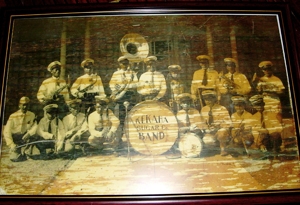
The wind band called Kekaha Sugar Company Band. Graciano Gadiaza was one of the player of saxophone.
Graciano Manzano Gadiaza from Calaoan, Candon City, Ilocos Sur went to Kauai in 1929 and worked in the sugar cane plantation as sakada. Just like other Filipino that were recruited in the Philippines from 1906 to 1945 to be part of the vast sugar cane plantation works in the islands and county of Hawaii.
He was not just a pukan cane (harvester of sugar cane). He was a musician and a talented one. He became one of the members of the Kekaha Sugar Company Band. The picture above was his remembrance during the golden years of his life.
The picture he brought to Philippines together with the musical notes does not served as remembrance only to his memory in the state which dominated by farm workers during that era. These are part of his life.
Filipinos loves music and even during those times, Filipino never really forget the tradition of music. And Graciano was one of the people who entertained the sugar farm workers.
[saluyot/ilocandia/wwwammuenpaydaytoysakada.blogspot.com]
Wednesday, February 20, 2019
Taldiap: Sakada, Nagpuonan ti Filipino nangruna Dagiti Ilokano tapno madanon ti Hawaii
THE SAKADAS: FROM THE FIELDS

|
Quidilla first earned 10 cents working 12 hours a day in the Waipahu cane fields, said his 22-year-old daughter, Sharon.
Enduring 43 years of back-breaking labor, Quidilla suffered from a stooped back and gnarled fingers, had a toe severed by a bin accidentally dropped on his left foot, and cauliflower ears inflamed by bundles of sugar cane being carried on his shoulders.

|
Officials hope to put stories like Quidilla's on display one day with those of other "sakadas" (Filipino plantation workers) at the new Filipino Community Center, opening Tuesday in Waipahu. It is just down the street from where Quidilla used to live and work.
The Filipino community credits the sakadas, who came to Hawaii in three waves of immigration, trailblazing the way for successive generations and giving them a chance to thrive in politics, education, sports and medicine.
Sharon Quidilla recalled how her father would often stress the importance of obtaining an education.
He would say, "Please, 'anako' (Tagalog for child), go to school, have an education. Don't be like me so you don't have to work hard like me," Quidilla said.
Quidilla died at the age of 91.
His words come alive in Sharon Quidilla, who is taking nursing classes at Kapiolani Community College, while her younger sister, Myra, obtained her bachelor's degree in accounting from Pacific University in Oregon last month.
"Our accomplishments are honoring what he did and what he had to go through," Myra said.
The growing population of Filipino Americans in Hawaii stems from three waves of migration to the islands. During a drop in Japanese immigration, about 120,000 Filipino plantation workers arrived in Honolulu between 1906 and 1934.
Under the Hawaiian Sugar Planters Association, 15 men arrived in Honolulu on the SS Doric from the Philippines on Dec. 20, 1906, to work as laborers in the plantation fields. The following year, about 150 laborers were recruited to the islands.

|
Plantations were owned and controlled by five companies, called the Big Five, which included Theo H. Davies, Alexander & Baldwin, Castle & Cooke, American Factors (now Amfac/JMB Hawaii) and C. Brewer & Co.
The Filipinos were the last in the line of ethnic groups to be recruited to work on plantations in the islands. First, there were the Chinese, then the Japanese, Portuguese and Puerto Ricans. Spanish and Korean laborers were also recruited to work in the plantation fields.
Workers were transported to the cane fields by truck or train to start work at 6 a.m. planting, fertilizing and harvesting sugar cane. Supervisors imposed 12-hour workdays among the laborers. At the sound of a whistle, an hour's lunch and rest period was given. Like many plantation workers, Quidilla packed his lunch in a tin can layered with rice, vegetables and meat. Base pay for plantation workers was about a $1 a day. Sharon Quidilla said a majority of her father's earnings were sent back to the Philippines to help family members get an education.
Rigorous labor caused Simplicio Quidilla to develop a hunched back from hauling bundles of stalks of sugar on his back into trucks. Many cane carriers also developed cauliflower ears from tiny thorns on cane's leaves that cut into the laborer's earlobe, leaving it permanently disfigured.
During his employment with Oahu Sugar, Simplicio lived in a Filipino plantation camp behind the post office in Waipahu.
All cane field workers were issued metal identification tags called bango in pidgin. Bango tags were also used as a credit card to buy clothing and household items at stores. Items would be recorded by the store clerk under their bango tag number.
In 1974, Quidilla retired as a machine operator at the age of 65 and returned to the Philippines for vacation, where he met and married Erlinda Jamon. The couple settled in Waipahu near the Oahu Sugar Mill.
Some Filipino laborers would work temporarily in Hawaii and return to their homeland after earning enough money.
Though a native of the Philippines, Simplicio Quidilla never wanted to live anywhere else but in Waipahu, said his daughter Sharon Quidilla.
"He wanted to stay close to the sugar mill. That was his life," she said.
Throughout the early plantation days, Filipinos were stereotyped as industrious but uneducated.
Dean Alegado, chairman of the Ethnic Studies Program at the University of Hawaii-Manoa, said recruiters would favor uneducated workers who would not rebel against their supervisors.
However, a man named Pablo Manlapit organized a movement calling for higher wages for Filipino plantation workers. In 1924, Manlapit organized a strike, but it ended with the deaths of 16 Filipino workers who were shot and four police officers who were beaten in Hanapepe, Kauai, on Sept. 9, 1924.

The Tydings McDuffie Act of 1934 limited the number of Filipinos allowed to enter the United States. However, HSPA and the Pineapple Growers Association were exempted from the provision after they declared a labor shortage. This spurred the second wave of Filipino plantation workers between 1946 and the early 1960s.
"The excuse was a labor shortage. ... In reality, they were replacement workers," Alegado said.
The growers associations brought in more than 7,000 men, women and children to break a strike of plantation workers requesting better wages and working conditions under the International Longshore and Warehouse Union.
However, the associations' efforts failed after the new recruits joined the strike.
In 1946 the federal government allowed Filipinos to be recruited in the military, and the quota of Filipino sailors was increased under the U.S. military bases agreement. Thereafter, Filipinos in the military would return to the Philippines, get married and later move to Hawaii.
This second wave brought 10,000 to 12,000 Filipino military personnel, war brides and laborers to Hawaii.
Ewa Beach resident Steven Tingkang recalls the financial struggles of living in a plantation camp during the 1950s. His father, Escolastico, worked as a laborer irrigating the sugar cane fields and "just made enough (for us) to survive," Tingkang said. Tingkang was raised in Kunia Camp No. 26 where he and his younger brother, Robril, walked 20 miles a day to and from Waipahu Elementary School.
Tingkang, now 67, reminisced how he and his younger brother, Robril, would peel sugar cane stalks with a pocketknife.
Vegetables such as beans, okra and bitter melon were planted in the cane fields.
Tingkang said he and his family later moved to a camp in Pearl City Heights where multiethnic groups lived together.
"There was no hatred. Everyone was neighborly. ... In order to survive, everybody had to get together," he said.

|
During the third wave, Filipino Americans started petitioning to bring their brothers, sisters, sons and daughters to Hawaii. Also, Filipino Americans with professional degrees began to stream into Hawaii. Since 1965 between 4,000 and 5,000 Filipinos immigrated to Hawaii annually, making Filipino Americans the fastest-growing population in the islands, Alegado said. It is also the second-fastest growing population in the nation, trailing those migrating from Mexico.
Throughout the years, several Filipino Americans have gained local and national attention from politics to sports.
In 1954, Peter Aduja was elected to the Territorial House of Representatives.
In 1962, Benjamin Menor became the first Filipino American to serve as a Hawaii state senator. Twelve years later, Menor became the first Filipino American in the nation to be appointed to a state Supreme Court.
In 1974, Eduardo Malapit of Kauai became the first mayor of Filipino descent in the nation.
In 1994, Gov. Ben Cayetano became the first Filipino to be elected governor in the United States. Oahu resident Angela Baraquio became the first Asian American to win the Miss America pageant in 2001. Seattle Times reporter Byron Acohido of Wahiawa won a Pulitzer Prize in 1997 for his report on rudder system problems in the Boeing 737.
In medicine, Dr. Jorge Camara became the first physician in Hawaii to use telemedicine for a surgical procedure and the first in the nation for ophthalmology. Waipahu resident Brian Viloria won the 1999 national title in featherweight boxing, and Benny Agbayani continues to be a notable player in Major League Baseball.
During this year's legislative session, a bill was passed to establish a Filipino Centennial Celebration Commission. Cayetano was scheduled to sign the bill into law today. Members of the commission would organize a celebration in 2006 acknowledging the 100th anniversary of the arrival of Filipinos in Hawaii.
"From those humble beginnings, we have almost a century of progress," Alegado said.
*courtesy/credit to Rosemarie Bernardo/StarBulletin.com/can read on wwwammuenpaydaytoysakada.blogspot.com
Subscribe to:
Posts (Atom)